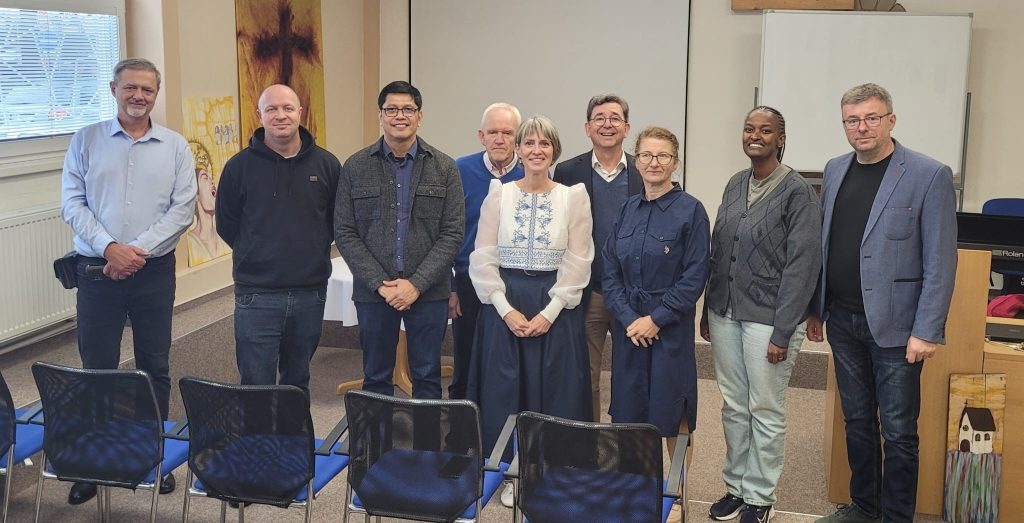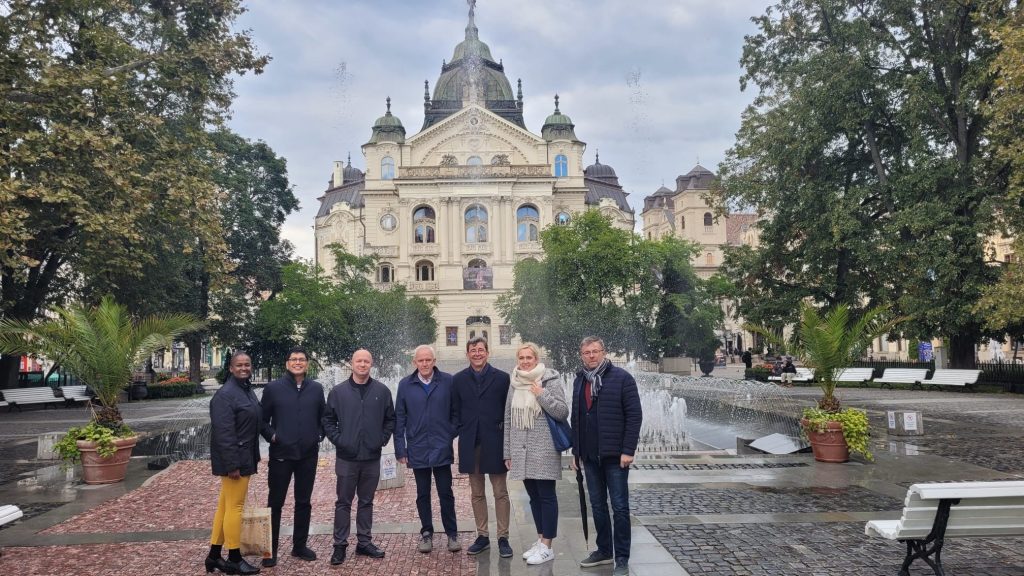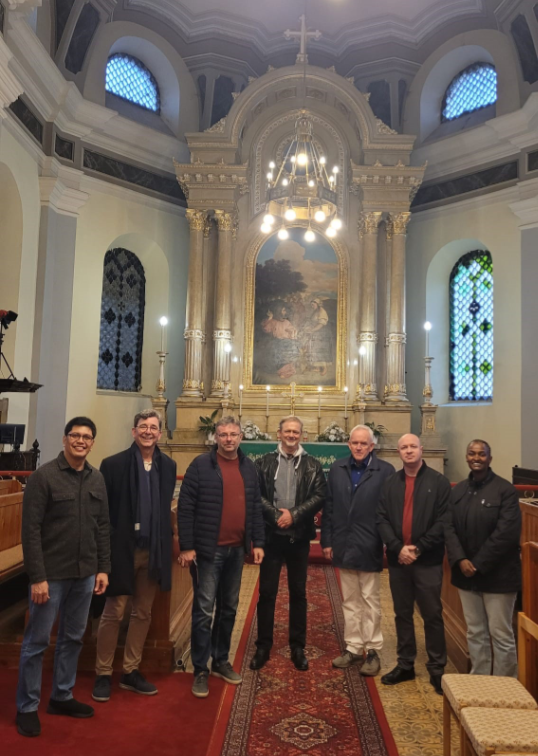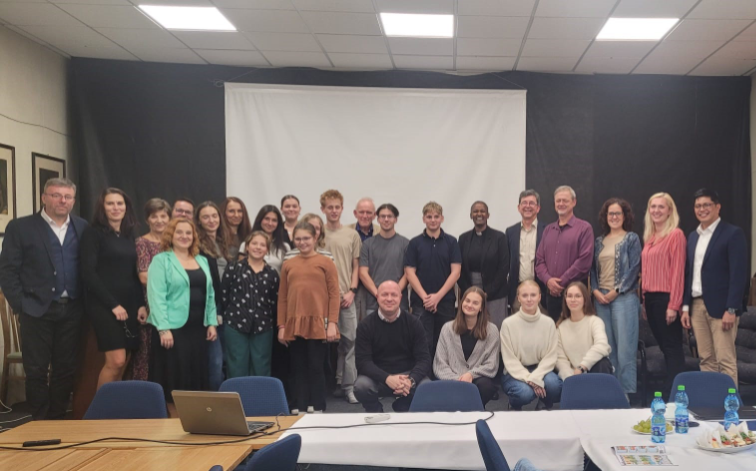
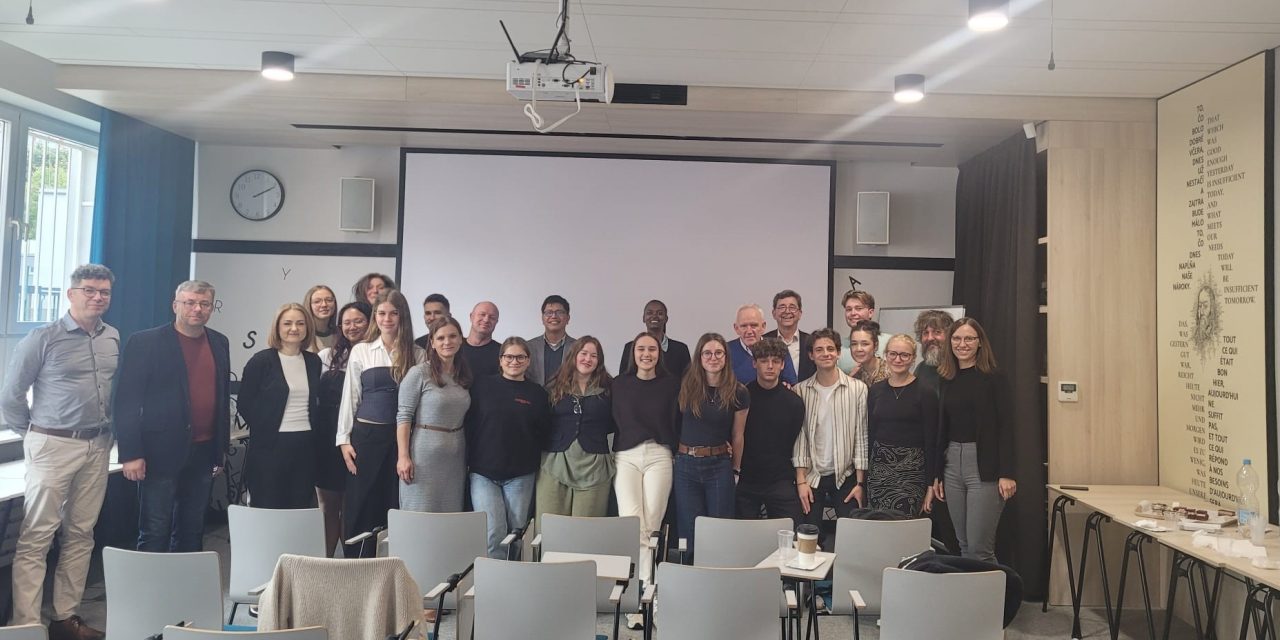
At the turn of September and October 2025, directors and teachers of Protestant schools from the Netherlands, Hungary, Brazil, Tanzania, and the Philippines visited Evangelical schools under the Eastern District. Although there were not many of them, each represented hundreds of colleagues and theousands of students who share the same value foundation.

The study trip was organized by International Association for Christian Education, which includes the Association of Evangelical Schools in Slovakia. They did not come as tourists, but as colleagues eager to understand. They did not come to admire facades or landmarks (although they did look at those too), but to immerse themselves in the daily life of our schools. They were interested in what lies behind the doors of our classrooms, how we teach, how we listen, how we communicate with students and guide them on their journey, and how we create an environment of trust and respect.
During the 4-day stay, they visited Associated Lutheran School in Prešov and in Liptovský Mikuláš, as well as the Lutheran Gymnasium in Košice. The visit not only included a tour of the school building and official meetings with the principals, but also getting acquainted with the School Educational Programs, visiting classrooms, and having personal conversations with students and teachers.
The study trip also included a meeting with Lutheran Bishop Peter Mihoč, who introduced them to the activities of the bishop’s office and explained the system of Lutheran education in Slovakia. There was also a visit to the salt mining museum at Solivar and to the historic corners of Košice.
All of this left a strong impression on them. Their feedback was full of appreciation – they praised our openness, professionalism, and human approach. The benefits of the study visit were also expressed by religion teacher Nathan Krieger from Brazil: “Participation in this study visit was an enriching experience, accompanied by meetings with schools that vividly embody the values of Protestant education. I found many common elements with schools in Brazil. It was inspiring to observe the students’ joy, the teachers’ enthusiasm, and the staff’s effort to make the school a place of welcome and comprehensive education.”
The concluding discussion revealed that Protestant education retains its universal characteristics, which are evident across various cultural and geographical contexts. For example, evangelical schools actively support cultural, musical, sports, and leadership activities, contributing to the well-rounded development of students. An important part of the educational process is also the promotion of critical thinking, which leads students to independence, responsibility, and the ability to reflect on the events around them. The educational environment is also characterized by an ecumenical and open spirit that promotes mutual respect, dialogue, and acceptance of diversity. Education is also firmly rooted in Christian and human values, which naturally reflect in the daily life of the school. Faith is lived spontaneously in the school environment – it is not imposed, but is a natural part of relationships, activities, and the school’s atmosphere. In Lutheran schools, a value-oriented approach is used, which combines academic development with the spiritual and personal growth of students.
We are grateful for this exceptional experience – for the conversations that enriched us, for the perspectives that showed us that even though we are small schools in Central Europe, we are part of a large network of schools united by the same vision. We are thankful that we could be those grains of sand that, together with others, make up the beach – diverse, lively, beautiful. “Education is a bridge that connects hearts regardless of language, culture, or continent.” We are glad that during these days we not only built this bridge but also walked across it together.
Zuzana Martausová